How Children Learn to Make Safer Decisions When Riding a Bike
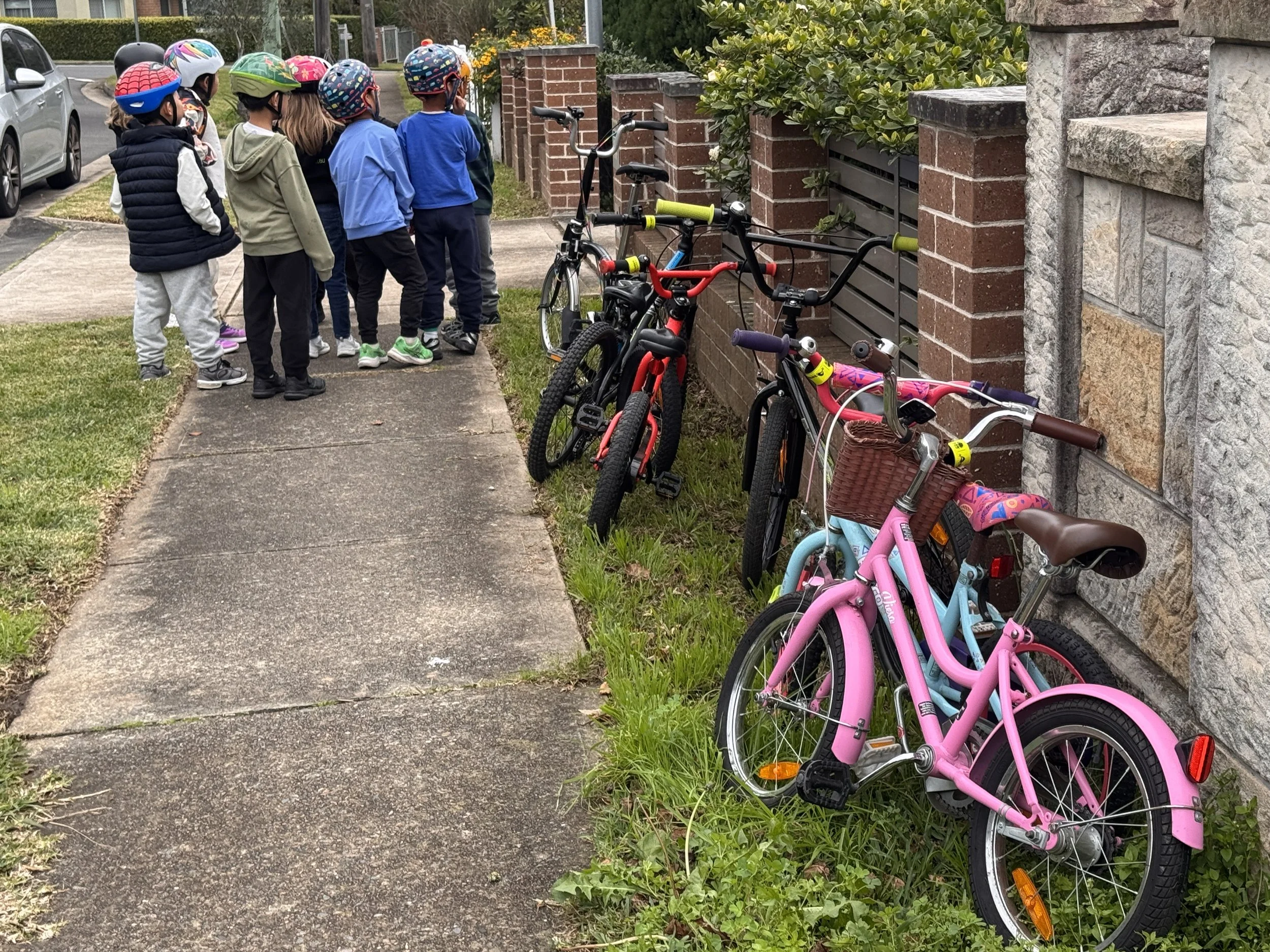
If we want children to become confident, independent riders one day, they need more than rules. They need opportunities to observe, think, ask questions and make decisions with the support of a trusted grown-up.
"Be careful."
It's probably one of the most common things adults say to children around roads.
But have you ever stopped to wonder what be careful actually means to a child?
For many children, it doesn't provide enough information to help them make good decisions.
At Pedal Set Go, we believe children become safer riders by learning how to observe, think and make decisions with the support of a trusted grown-up. We teach children to ride bikes safely and confidently through children's bike lessons and family lessons in Sydney.
Learning to ride a bike is about much more than balancing, pedalling or braking.
It's about developing the judgement to recognise changing situations and gradually becoming a confident, independent rider.
Good judgement starts long before independence
One of the questions we're often asked is:
"When is my child ready to ride independently?"
There isn't a simple age.
Children develop at different rates, and every riding environment is different.
Before children are ready to make independent decisions around roads, they first need opportunities to practise observing, communicating and thinking about what is happening around them.
Adults still make the final safety decision.
But children can begin developing decision-making skills much earlier.
Replace instructions with questions
Instead of simply saying:
"Stop."
"Look."
"Be careful."
Try asking questions that encourage your child to think.
For example:
What can you see?
Is anything blocking your view?
Where could a car, bike or scooter come from?
Is that vehicle stopping, turning or still moving?
What do you think might happen next?
Would you cross now or wait? Why?
These questions don't test memory.
They help children notice their environment and explain their thinking.
That's a skill they'll use for life.
Everyday places become everyday lessons
You don't need to wait for a formal bike lesson to help your child become a safer rider.
Some of the best learning happens while:
walking to school
crossing a driveway
waiting at a pedestrian crossing
riding along a quiet shared path
stopping at an intersection
watching traffic together
Every outing provides opportunities to ask questions and build observation skills.
Over time, children begin recognising patterns and understanding why different situations require different decisions.
Every street is different
Many adults naturally teach children rules.
Rules are important.
But no two streets are exactly the same.
A driveway partly hidden by a hedge.
A shared path with people walking dogs.
A quiet street with parked cars.
A busy crossing outside school.
Each environment asks children to observe, think and adapt.
That's why we focus on helping children understand what is happening around them, rather than simply memorising what to do.
Safe riding starts before the bike is moving
Many people think riding safely is all about balancing and steering.
Those skills are important.
But safe riding also begins before the pedals start turning.
Children learn confidence by practising how to:
carry out a simple bike safety check
adjust their saddle correctly
mount and dismount with control
start and stop smoothly
look around before moving
communicate with others
Strong foundations help children feel calmer, more in control and better prepared as their riding develops.
Riding is about thinking as well as doing
At Pedal Set Go, we spend a lot of time talking with children during lessons.
Not because we're slowing things down.
Because we're helping children build judgement.
Instead of giving constant instructions, we ask questions.
"What can you see?"
"What might happen if...?"
"What would you do?"
These conversations encourage children to become active participants in their own learning.
Over time, those discussions become habits.
Parents are children's first bike educators
Children learn most by watching the adults around them.
Every walk to school.
Every family bike ride.
Every trip to the park.
Every conversation at a driveway or crossing.
These moments are opportunities to help children develop confidence and decision-making skills.
You don't need to know everything.
You simply need to be curious together.
Learning to ride is only the beginning
Many parents think learning to ride finishes once a child can pedal independently.
In reality, that's when the next stage begins.
Building confidence.
Learning to share paths.
Understanding roads.
Planning routes.
Communicating with other people.
Making thoughtful decisions.
These are the skills that help children become lifelong riders.
How Pedal Set Go can help
Whether your child is learning to ride for the first time or already riding confidently, our lessons focus on much more than bike handling.
We help children build:
observation skills
communication
confidence
bike control
decision-making
safe riding habits
Through practical activities and supportive instruction, children learn to understand their surroundings, think ahead and gradually become more confident riders.
Because our goal isn't simply to teach children to ride a bike.
It's to help them enjoy a lifetime of confident, everyday riding.
Safe riding starts with good noticing.
Is your child reluctant or anxious about learning?
Read:
When a Child is Reluctant to Learn to Ride
Continue learning
As children grow, the way we teach them changes too.
Teenagers are developing independence, confidence and decision-making skills of their own. They often respond best when they're involved in understanding why something matters, rather than simply being told what to do.
Read next:
Helping Teenagers Become Confident, Independent Bike Riders
Explore practical ideas for supporting teenagers as they develop the skills, judgement and confidence to ride more independently.